Single-Hose vs. Dual-Hose Portable ACs: What’s the Difference?
If you’ve started shopping for a portable air conditioner, you’ve probably seen units described as “single-hose” or “dual-hose.” It’s an easy detail to overlook, but it affects how efficiently the unit cools and how much it costs to run. Here’s what the difference actually means in practice.
How a Single-Hose Unit Works
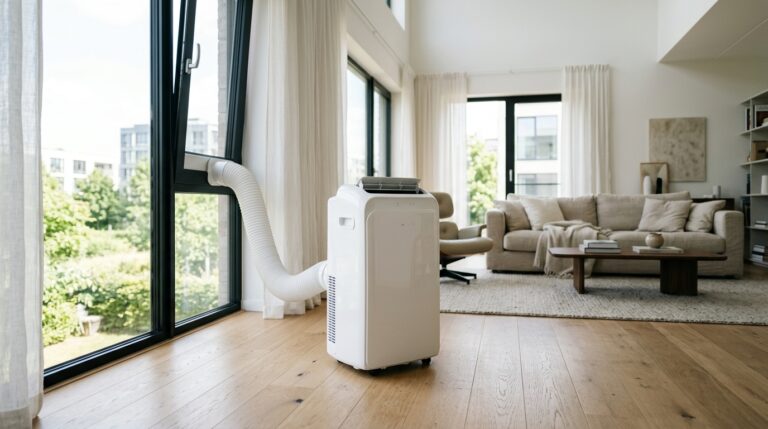
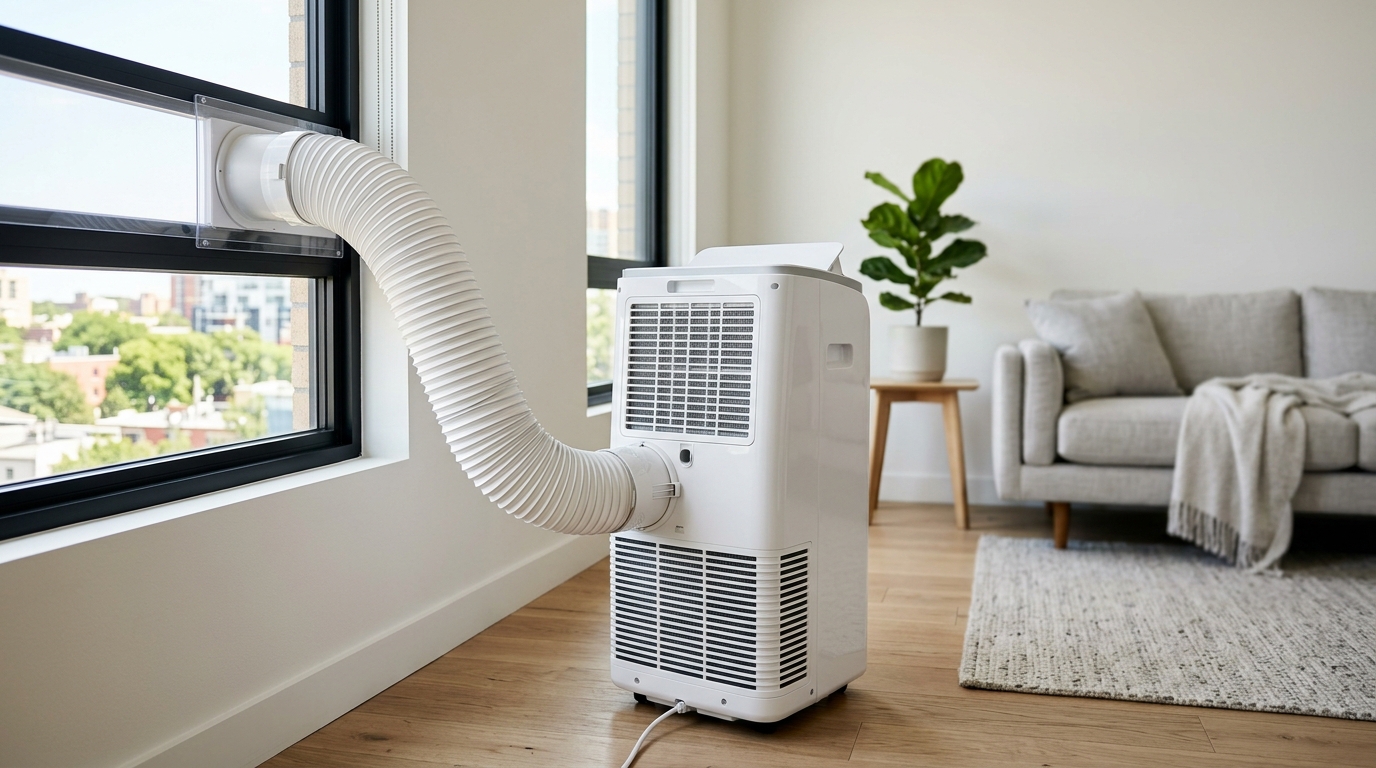
A single-hose portable AC pulls air from inside the room, cools it, and pushes the resulting hot exhaust air outside through one hose. It’s the more common and usually more affordable design.
The trade-off is something called negative pressure. Because the unit is constantly expelling indoor air outside, your room develops slightly lower air pressure, which pulls warm air in from hallways, gaps, and adjacent rooms. The unit then has to cool that incoming warm air too, which makes it work a little harder.
How a Dual-Hose Unit Works
A dual-hose unit uses two hoses: one draws in outside air to cool the internal components, and the other expels the hot exhaust. Because it isn’t pulling conditioned air out of your room to do that job, it avoids most of the negative-pressure problem and tends to cool larger spaces more efficiently.
Which Cools Better?
In larger rooms and hotter climates, dual-hose units generally cool faster and more evenly, and they often use energy more efficiently because they aren’t fighting against incoming warm air. In smaller, well-sealed rooms, a quality single-hose unit can perform perfectly well—the negative-pressure effect is much less noticeable in a compact space.
The Pros and Cons at a Glance
Single-hose
- Usually less expensive and more widely available
- Simpler setup with one hose to manage
- Less efficient in large rooms due to negative pressure
Dual-hose
- More efficient cooling, especially in larger or hotter rooms
- Less negative pressure, so more consistent temperatures
- Often costs more and the two hoses take slightly more setup
Which Should You Choose?
For a small bedroom, home office, or a mild climate, a single-hose unit usually offers the best value. For a larger living area, an open floor plan, or a region with intense summer heat, a dual-hose unit is worth the extra cost for its efficiency and steadier cooling.
Either way, sizing still matters most—check our BTU sizing guide first so you match the unit to your room.
Ready to compare specific models? Our Best Portable Air Conditioners of 2026 guide breaks down the top picks, including both single- and dual-hose designs, so you can find the right balance of price and performance.